Pages

Showing posts with label dangerous plants. Show all posts

Wednesday, May 9, 2012

Small But Incredibly Dangerous Creatures

Anopheles Mosquitoes 
Deemed the most dangerous creature on Earth. This mosquito causes more than 300 million cases of malaria annually, which results in between 1 to 3 million deaths. They can also carry dengue, elephantiasis, and yellow fever. They are usually active during the nightime so one way to protect yourself is to apply insect-repellents and wear longer sleeves.


Bullet ant 
A bite from a Bullet ant will not kill you, but you will never forget it. The Bullet ant (thus named because a bite feels like being shot) inflicts the most painful bite of any creature known to man. It is number one on the Schmidt Sting Pain Index where it is described as causing “waves of burning, throbbing, all-consuming pain that continues unabated for up to 24 hours”.


Army Ant
While not dangerous on their own, these ants live and travel in swarms. They are found mostly in Africa and Asia and they build temporary anthills while traveling. The greatest risk these ants pose to humans is when they are swarming through homes. When food supplies are low, these ants will swarm in sizes of up to 50 million single ants. There are reports of humans – usually young or infirm being killed through suffocation (the ants will often enter the lungs of the person) and be entirely consumed. Their mandibles are so strong that in some parts of Africa they are used individually as emergency sutures when medical supplies are not available.


Black widow spider
One of the most well-known spiders, especially because its venom could be fatal to humans. The venom is said to be more potent than that of rattlesnakes, however, their size and the amount secreted reduce its effectiveness. Both male and female have an hourglass shaped marking underneath their abdomen. The females are relatively larger than the males and contrary to popular belief, the females rarely eat the males after mating.


Africanized Bees 
Also called killer bees, are descendants of 26 Tanzanian queen bees that bred with other species after they were accidentally released from a hive in Brazil. What makes the bees deadly is their defensive nature and tendency to swarm. Also, they tend to follow victims even when already far from the hive. This aggressiveness when attacking potential threats ensure a very painful death for the victim. The venom that they secrete, however, is just as potent as a honey bee’s.


Tsetse Fly 
A large biting fly fom Africa that feeds on the blood of vertebrate animals. They are known to cause Sleeping Sickness in humans and Nagana in cattle. Sleeping sickness is a parasitic disease in people and animals that is caused by Trypanosoma, a protozoa transmitted by the tsetse fly. The symptoms for sleeping sickness begin with fever and headache then a swell on the back of the neck. Afterwards, the victim may experience daytime slumber and insomnia. It could lead to death afterwards.

Tarantula Hawk
Tarantula hawks are named for the fact that they hunt tarantulas as food for their larvae. It’s sting is rated as one of the most painful in the world (though not as painful as the bullet ant). One researcher described the sting as causing “[...] immediate, excruciating pain that simply shuts down one’s ability to do anything, except, perhaps, scream. Mental discipline simply does not work in these situations.” The Tarantula Hawk is the official state insect of New Mexico.


Ticks
Ticks are second only to Mosquitoes for their disease spreading properties. Ticks feed on blood and attach themselves to other animals (including humans). They can be difficult to remove and removal must be done carefully as they can leave part of their head behind causing serious infection. According to Wikipedia, hard ticks can transmit human diseases such as Lyme disease, Rocky Mountain spotted fever, tularemia, equine encephalitis, Colorado tick fever, African Tick Bite Fever, and several forms of ehrlichiosis.


Death Stalker
A species of scorpion that is highly dangerous because of its venom. The venom is actually a powerful mixture of neurotoxins. Although, the poison would not kill a healthy adult, it could be fatal to kids and the elderly. Ironically, a component of the venom (peptide chlorotoxin) has the potential to cure human brain tumors while the other toxins may help against diabetes.

Sunday, May 6, 2012

Most Dangerous Plants in the World

1.Giant Pitcher Plant (Nepenthes attenboroughii)

(Most likely to eat a rat)

Discovered more than 5000 feet above sea level on Mount Victoria in the Philippines, the giant, carnivorous pitcher plant secretes a nectar-like substance to lure unsuspecting prey into a pool of enzymes and acid. A series of sticky, downward ribs makes it nearly impossible for trapped prey to escape. The plant's 30-centimeter diameter is large enough to trap unlucky rodents, but insects are its most common meal. Pitcher plants, of which there are about 600 different species, tend to grow in nitrogen-deficient environments, and therefore get their nutrients from decaying victims. 


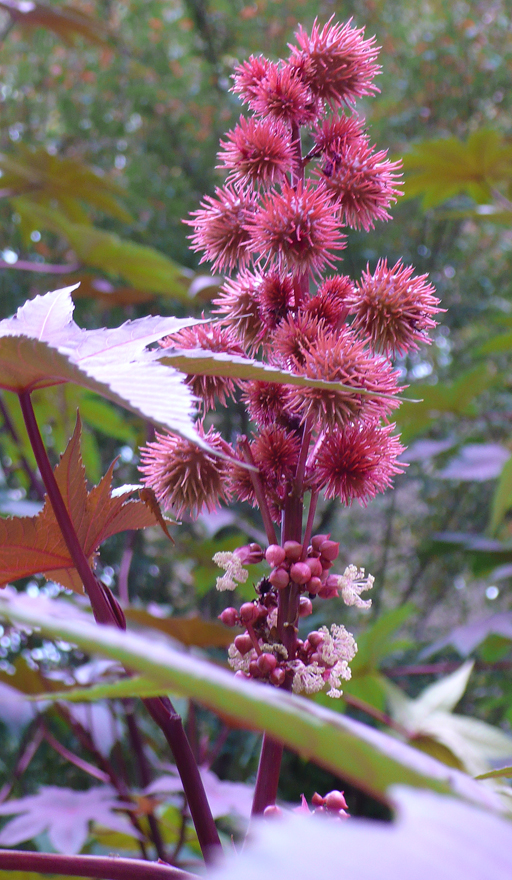
2.Castor Bean Plant (Ricinus communis)

Castor-bean plants can be purchased at just about any garden center, despite containing the deadly poison ricin. Amy Stewart, author of Wicked Plants and poisonous plant expert, has an affinity for the plant and grows several in her poison garden. Concerned gardeners can simply pluck the seeds off the plant, Stewart says, which is where the ricin is stored. Though the process to extract enough ricin and process it into a weapon is complex, Las Vegas authorities have discovered the toxin in a hotel room in February 2008, and the KGB used it to permanently silence opposition. 

3.Western Water Hemlock (Cicuta douglasii)
(Most violently toxic plant in North America)
Deemed the most "violently toxic plant that grows in North America" by the USDA, the water hemlock contains the toxin cicutoxin, which wreaks havoc on the central nervous system, causing grand mal seizures--which include loss of consciousness and violent muscle contractions--and eventually death, if ingested. Water hemlock is different from poison hemlock, Socrates' notorious killer, in that it contains coniine alkaloids that kill by paralyzing the respiratory system. Both are members of the carrot family. 


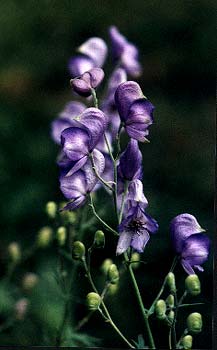
4.Monkshood: Aconitum napellus
Stewart was once asked what the best plant would be to murder a dinner guest with--after much deliberation she landed on monkshood. "You could just chop up the roots and make a stew," she says. "You don't need a chemistry plant to do it." The vibrant purple plant, commonly found in backyard gardens, is loaded with the poisonous alkaloid aconite, which tends to cause asphyxiation. While Stewart is certainly joking about cooking up a batch of monkshood stew, she urges anyone who has the plant in their garden to wear gloves when handling it. 

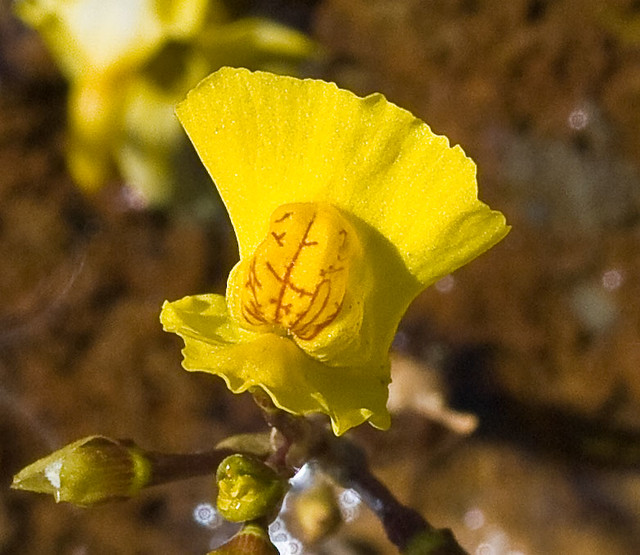
5.Common Bladderwort (Utricularia macrorhiza)
This aquatic meat eater relies on several submerged bladders to capture prey such as tadpoles and small crustaceans. An unsuspecting passerby will brush against an external bristle-trigger, causing the bladders to spring open and capture it. Once inside, the victim dies of suffocation or starvation and then decays into a liquid that is sucked up by cells on the walls of the bladder.


6.Venus flytrap (Dionaea muscipula)
With the ability to clamp shut in a half-second, the Venus flytrap's reaction time seems fit for the animal kingdom. Insects need to touch two of the flytrap's hairs consecutively in order for the plant to react, but the precise mechanism that shuts the trap remains unclear. The Botanical Society of America notes that early theories suggested that a sudden change in the water pressure of cells triggered the response, but this theory has since been abandoned. It now seems that when the plant is touched, the electrical potential of the leaf is altered, triggering a host of cellular-level events. 


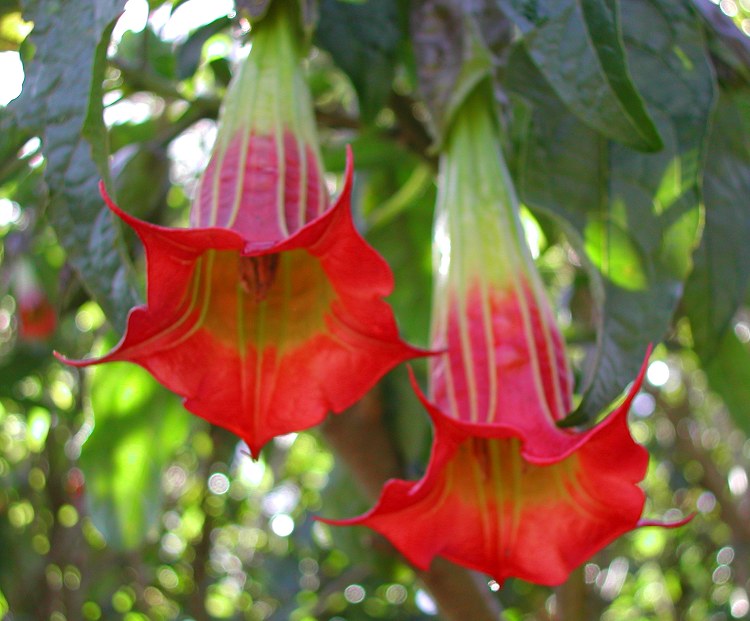
7.Angel Trumpet (Brugmansia)
The droopy, gorgeous angel trumpet, native to regions of South America, packs a powerful punch of toxins, containing atropine, hyoscyamine, and scopolamine. As documented in the 2007 VBS.tv documentary "Colombian Devil's Breath," criminals in Colombia have extracted scopolamine from the plant and used it as a potent drug that leaves victims unaware of what they are doing but entirely conscious. Scopolamine can be absorbed through the skin and mucous membranes, allowing criminals to simply blow the powder in a person's face. The documentary is filled with scopolamine-related horror stories, including one account of a man moving all of his possessions out of his apartment (and into the hands of his robbers) without remembering any of it.

8.Oleander (Nerium oleander)
This extremely common evergreen shrub is one of the most poisonous plants in the world. "If I were a parent and covering every electrical outlet in the home to protect the kids, I would really have to ask myself why I had an oleander plant growing," Stewart says. The leaves, flowers and fruit contain cardiac glycosides, which have therapeutic applications but are likely to send someone into cardiac arrest should he eat part of the plant. Stewart points out that there is a woman in California currently on death row for trying to poison her husband with the plant, and two young boys were found dead after ingesting oleander a few years back. "People tend to be blasé, because the flowers are bright and pretty, sort of candy-colored. But it is a very poisonous plant that will stop your heart." 


9.Mala Mujer (Cnidoscolus angustidens)
Stewart describes this garden plant as more painful than poisonous. Mala mujer, which translates to "bad woman," can be found in parts of the southwest and Mexico and is covered with nasty thorns, which could be turned into makeshift barbwire if needed. The real danger, however, comes from the caustic, milky sap that can leak from the plant. The sap, a common feature among many plants in the Euphorbia genus, can cause painful skin irritations and unsightly discoloration. "I've had several people tell me they had euphorbia saps in their eyes," Stewart says. "And they had pretty surprisingly long-term eye damage."


Twitter Delicious Facebook Digg Stumbleupon Favorites More

 
Powered by Blogger