Pages

Showing posts with label forests. Show all posts

Thursday, May 10, 2012

Top 10 Strange flying animal

10.Flying Squirrel
Okay, as flying animals go, flying squirrels are almost mundane; at least most of us have heard of them, although the closest we have come to seeing one was when one hung out with a stupid cartoon moose. The real animal is pretty strange; it looks like someone ironed out a hamster and made it jump from trees. Flying squirrels are the world record holders for “flying” animals, which is to say, of all the gliding animals that are called fliers, they go the farthest, reaching a stunning 288 feet in a single jump! The only humans to go that far after a jump unfortunately fell 30 stories and had to have the evening news tell of their “accomplishment.”

9.Flying Phalangers
Okay, if you have no idea what a phalanger is, join the club. They are apparently an Australian subfamily of possum that manages to survive the horrors of that island continent by cuting them into submission. I mean it, that picture is an adult. I can only imagine the babies are…. Holy crap… Lookatthose… If they made Care Bears that looked like that, adult men would scream and cry if they were forced to leave Toy ‘R’ Us without one.
At any rate, the most famous phlying phalanger is the sugar glider, which sounds like it flies with fairies and delivers laughs to kittens. They can glide for about 50 to 150 feet and are likely the cutest thing to ever take to the air. It’s also the last thing on the list that would even remotely qualify as “cute.”


8.Flying Lemurs 
These things are called flying lemurs because “air sailing horror-beast” was too wordy. Or maybe because they are related to lemurs. Believe it or not, that is the closest thing on earth to being a primate without actually being one. They are also called colugos and outside of bats, they are the mammals most highly adapted for flight. As you can see, their limbs and tail are connected by flaps of skin that connect out to the very ends of them, thereby increasing their surface area and making them better gliders. They are apparently incredibly bad climbers, which is odd since they glide rather than fly, but are extremely maneuverable and can glide up to 3230 feet, with almost no loss in height. (most other “gliders” are more accurately “controlled fallers”).
They are also really scary looking animals that have no doubt inspired tales of flying monkeys stealing children.


7.Flying Lizard
I am of the mind that lizards, at least the small ones, are kind of cute. They often have big doe-like eyes and rid the world of bugs. However I am also of the mind that anything that drops on you from a tree unexpectedly is instantly frightening. Pictured above is an Indonesian lizard of the genus Draco, which as you may have guessed, means “dragon.” They have been known to glide as far as 195 feet while only losing 30 feet in height from the initial jump.  Unlike the flying mammals, they don’t have loose skin strung between their arms and legs for gliding, but rather extended ribs, which makes them about the only thing in nature to achieve a super power by being blended with one of Jigsaw’smurder machines.


6.Flying snake
If you are afraid of snakes, you probably did not need to know that in some parts of the world, you are in danger of them gliding out of the forest canopy and landing on you. Sorry about that. They also live in the same parts of the world as the flying lemur and the flying lizard, which makes me wonder, what is in those trees that is so bad that multiple animals evolved gliding abilities to escape it?
The flying snakes are “mildly venomous”, which means they have poison, but it is not harmful to humans. Likely 90% of the people who read that don’t care about the “not dangerous to humans” part and will likely focus on the fact that South East Asia and Indonesia have flying poison snakes. Life in that part of the world must be like a game of Pitfall.


5.Flying Frog
Finally, we move past horror animals into merely curious. Flying frogs have apparently evolved from several different lines of frog, in most places in the world where there are tree-dwelling tropical frogs. They developed their “parachuting” ability as a means of predator evasion, and fortunately lack the pants-wetting ability of flying lizards and snakes because even a giant house-sized frog would be inherently adorable.
Appropriately enough, the first described flying frogs were found in Malaysia and Indonesia, where they spend their lives dodging every other flying creature. I can only imagine the forest skies of those nations look like air traffic control screens, only filled with bug eating animals and snakes.


4.Flying Fish
Okay, no more jumping out of trees, these guys live in the ocean.  While flying from one tree to another is impressive,leaping out of the ocean and gliding 160 feet is awesome. Now, the flying squirrel may have the tree to tree world record, but they have nothing at all on flying fish. The record for a sustained glide by a flying fish is 1300 feet, at a speed of 42 miles per hour! The achieve flight by beating their tail 70 times a second and launching themselves out of the water, then ride the updrafts waves produce. They can fly up to 20 feet vertically into the air, and sometimes accidentally strand themselves on ships.
Those are impressive numbers for an animal that is generally designed to swim for a living, and can’t even breathe air.

3.Mobula Ray
What is 17 feet across, weighs over a ton, and can launch itself out of the sea? Why, a mobulaof course! As rays go, they are only second in size to the manta ray, and they can jump as high as 6 and a half feet out of the water. Now, there is some danger here; a woman in Florida was killed when an eagle ray jumped into the boat she was on and hit her, and they top out at a few hundred pounds. Imagine being hit with a flying ton of fish. Still, there are videos on youtube of these things breaching, and it is pretty damn spectacular.


2.Gliding Ants
Okay, so there are species of ant that fly with wings, so what is so interesting about “gliding” ants? These are un-winged ants that fall into a very specific subset of requirements, like having good eyesight, living in rain forests that flood, and forage for food at the ends of branches. They also tend to be armored. When they fall from trees, they focus on the lighter color of the trunk against the darker forest background, and then flatten their head, legs and abdomen and then glide from free-fall to a J-shaped flight, and then grasp the tree. The whole thing seems to have developed as a way to avoid falling out of trees and being eaten on the forest floor. Gliding ants have an 85% greater chance of falling and landing on a tree than ants that just fall. So nature deigned ants that are clumsy, but make up for it by being X-Men.


1.Flying Squid
That is no PhotoShop, that is an actual squid gliding over the ocean. Believe it or not, they actually display behaviors that show they actively maintain their glide, meaning they may not be gliders at all and may actually be flying squids. They act very much like the flying fish, using their ability to evade predators, and also wind up on ship decks.
Scientists aren’t exactly sure how they manage to launch themselves or maintain their flights, which adds a layer of mystery to the already weird fact that they are cephalopods that can take to the air and glide. Flying fish can be related to at least a little bit, since we probably evolved from fish some time way back in the past, but the only mollusks to ever leave the water were snails and slugs, so this is kind of like the fish skipping the amphibian and reptile stages and jumping right into birds.

Monday, May 7, 2012

Top 10 Cutest Creatures


10.Pipefish

9.European mole 

8.Kiwi

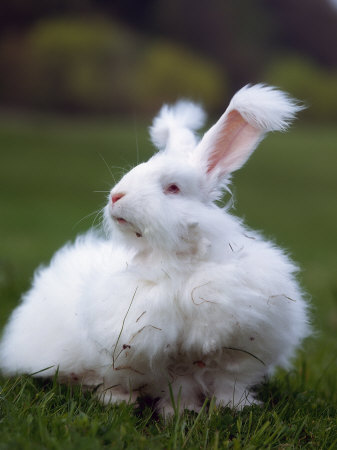
7.Angora Rabbit

6.Puffer Fish 

5.African Pygmy Hedgehog

3.Dwarf Hamster

3.Manatee

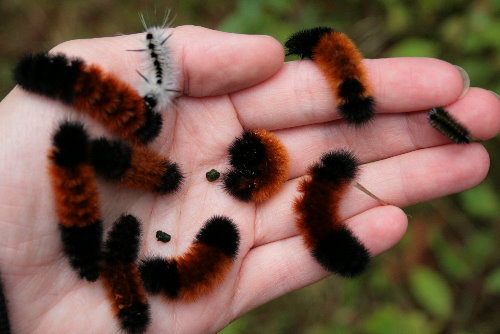
2.Woolly Bear Caterpillar

1.Silky Anteater

Friday, May 4, 2012

Chameleon.


1. They have long tongue having a sticky tip on the end, which serves to catch prey items that they would otherwise never be able to reach with their lack of locomotive speed. The tip of their tongue is a bulbous ball of muscle, and as it hits its prey, it rapidly forms a small suction cup. Once the tongue sticks to a prey item, it is drawn quickly back into the mouth, where the chameleon's strong jaws crush it and it is consumed.


2. The characteristics of changing their skin color make them one of the famous lizard family species. Changing the skin color is an expression of the physical and physiological condition of the lizard. The colour also plays an important part in communication between other chameleons. If they are fearful or territorial, their emotions will evoke a particular color/pattern.


3. Chameleons have teeth to grasp onto food. Their teeth are also used to help them crush and kill their food. They may chew or swallow their food whole. They can also use their teeth for tearing chunks off and then swallow. Some chameleons hold the dead prey in their mouth for several moments before swallowing it.

4. They lay eggs in a 4 to 12 inches deep hole. Some species lay 2 to 4 eggs while other species lays 80 to 100 eggs. Some species of chameleon give birth to young ones.


5. Their eyes are the most distinctive among the reptiles. The upper and lower eyelids are joined, with only a pinhole large enough for the pupil to see through. They can rotate and focus their eyes separately to observe two different objects simultaneously. It in effect gives them a full 360-degree arc of vision around their body.


6. They have zygodactyl foot, on each foot the five toes are fused into a group of two and a group of three, giving the foot a gripping and lifting like appearance. With their specialized feet, they grip tightly to narrow branches.


Wednesday, May 2, 2012

Fruit Eating Bat.


The fruit eating bat is a flying nocturnal mammal that lives in the Amazon Rainforest in fruit trees on the canopy layer. It is also one of the largest bats in the world.


 Fruit eating bats eat flower nectar and fruit juice. They only eat the juice of the fruit and they do this by squashing the fruit and spitting out the pulp. Because they eat fruit they are a big part in the pollination and seed dispersal of flowers and fruit. Some of the fruits that depend on bat pollination and seed dispersal are bananas, peaches, avocados, mangoes, cashews, figs, and guava.


  Fruit bats live in large groups called camps. They get around by flying.The enemies of the fruit-eating bat are humans. This is because humans sometimes eat them and because of deforestation. Deforestation is bad for them because it is destroying their home, which could cause them to be endangered later, but luckily bats are largely responsible for reforestation in the rain forest. This is probably because so many bats depend on survival of fruits.


Monday, April 30, 2012

Blue Morpho Butterfly (Morpho peleides)


Blue Morpho Butterfly (Morpho peleides) As its common name implies, they are colored in metallic, shimmering shades of blue and green, edged with black. The blue morpho is among the largest butterflies in the world, with wings spanning from five to eight inches. Their vivid, iridescent blue coloring is a result of the microscopic scales on the backs of their wings, which reflect light. The underside of the morpho’s wings, on the other hand, is a dull brown color with many eyespots, providing camouflage against predators such as birds and insects when its wings are closed..


Black Widow Spider (Latrodectus)


The Black Widow spider is the most poisonous spider in North America, but only the adult female. 
The female Black Widow is easy to recognize (if you care to get that close) by the red hourglass shape on the underneath part of her abdomen. She has a shiny black body with various types of red markings on the top, depending on the species.  There are about five species of Black Widow spiders in North America. 


Black Widows will lay up to 400 eggs at a time, but they are known to be cannibals, which means that they will eat each other. The Black Widow has unfairly earned a bad reputation for wanting to eat her mate. She will only eat her mate when she mistakes him for a meal!

The silk of this spider is known to be the strongest of all silk. The Black Widow spider does not spin the pretty webs, instead she will spin the thick jumbles looking cobweb. These webs catch beetles, flies, grasshoppers, moths and other spiders. 


These spiders, although a little scary, have enemies, as well. A few wasps can sting and paralyze, before eating the Black Widow. She is also a favorite food of the Praying Mantis.  Some birds will eat these spiders but could end up with an upset stomach from her poisons. The bright red markings on her belly will warn possible predators that she is a nasty meal.


Sunday, April 29, 2012

Pit Viper


  • There is a group of snakes that are known as Pit Vipers.
  •  Not only are these snakes venomous they also have a very 'cool' heat sensing system. 
  • This helps these snakes to find prey in the dark, which is when most snakes like to hunt. The ‘pit’ is a special organ in between the eyes and the nostrils. 
  • The pit senses body heat from animals and gives the snake a ‘picture’ of that animal. 
  • The snake can then attack it. Some pit vipers will bite and poison the prey and then release it.
  •  It will follow the dying animal, using its heat sensors, until it stops and the snake can swallow it.
  •  Most pit vipers hunt at night when the air is cooler and the heat from rodents and other prey is most obvious to them. 
  • The ‘heat picture’ from larger animals will tell the snake that a quick escape is a good idea.
  • All rattlesnakes are Pit Vipers.  Water Moccasins, Horned Desert Viper, Lance-head, Eyelash Viper, the Copperhead, and some Tree Boas are a few other examples of pit vipers.

THE MOST COLORFUL TREE IN THE WORLD


Rainbow Eucalyptus (Eucalyptus deglupta)

The Rainbow Eucalyptus (Eucalyptus deglupta) or 'MINDANAO GUM' is the only species of Eucalyptus tree found in the northern hemisphere. As if that weren’t extraordinary enough, the up to 70-m tall tree also shines in the colours of the rainbow: its bark can take on a yellow, green, orange and even purple shading!
If you want to spot a Rainbow Eucalyptus tree live and in all its glory, you’ll have to travel to Indonesia, Papua New Guinea or PHILIPPINES, the tree’s only native places. However, it has been introduced worldwide as an exotic wood in South America, Malaysia, Sri Lanka, China and other countries.

Twitter Delicious Facebook Digg Stumbleupon Favorites More

 
Powered by Blogger